Respiratory: Puppy Kennel Cough
Kennel cough is a highly
contagious disease caused by several viruses and bacteria. In puppies,
canine distemper, canine parainfluenza virus infections are more
common. Bortedella Bronchiseptica is most common bacterial cause of
kennel cough in dogs who are under 6 months old.
Puppies are more susceptible
to environmental stresses such as poor , temperature and humidity.
These factors play important role in primary & secondary
infections, and can lead to bronchopneumonia (inflammation of the lungs
and bronchus). 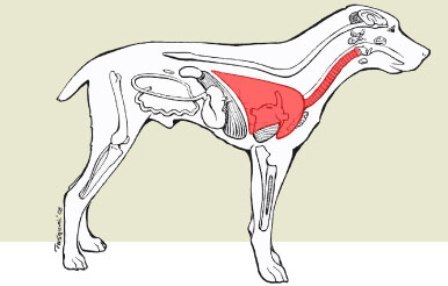
Kennel Cough in Puppies Primarily Affects the Upper Respiratory Tract, but could move to the lower tract in severe cases.
Source: Cornell University College of Veterinary Medicine
Signs &
Symptoms:
Puppies may severely cough,
gag & choke when suffering from kennel cough. Tracheal or wind
pipe palpation (toughing the wind pipe) may lead to cough. Vomiting
along with convulsions after severe cough also represents kennel cough
in puppies. Dry cough is common initially, but may develop to moist or
productive cough later on. Productive cough also represents the
existence of chronic infection and bronchopneumonia.
Sound of Dog Kennel Cough. Note that Kennel Cough can sound like other types of canine cough.
Diagnosis:
Kennel cough can be diagnosed
by the clinical signs & symptoms, history & culturing
of nasal swabs & discharge. Cough, if it persists for more then
5 – 7 days may be suspected to be kennel cough. When mild palpation
(touching of the trachea by the vet) leads to severe cough, it
indicates the presence of inflammation in the trachea &
bronchus; in other words kennel cough.Productive cough, severe
illness & emaciation represent complications associated with
bronchopneumonia. Treatment of
Kennel Cough in Puppies:
Antibiotics are usually
administered for kennel cough. Puppies are more sensitive &
responsive to antibiotics, therefore a thorough & complete
diagnostic approach should be followed prior to the use of antibiotics.
Screening & sensitivity tests are required in some breeds as
collies (to see if your dog will have a reaction to the medications
prescribed).Antibiotics are usually not
effective for the bortedella species if given per the oral or intra
muscular route. Aerosols of tetracycline & gentamycin diluted
in 3 ml normal saline are most effective options to cure kennel cough
in puppies.Cough Suppressants such as
codeine & hydrocodone are effective in puppies but should be
administered in low doses, repeated every consecutive days for a week.Special nutritional housing
care is needed in puppies for early recovery. Poor care can lead to
extended illness, complications & even death.For an added layer of support
homeopathic remedies are available for puppies that suffer from kennel
cough and other respiratory problems. One product specifically
formulated for this purpose is PetAlive KC-Defense.
It is made to naturally help dogs with
acute kennel cough and other respiratory infections. Given the severity
of kennel cough in puppies be sure to consult with a veterinarian. Prevention:
Puppies should be vaccinated
for adenoviruses & distemper viruses by live virus vaccines.
Initial doses are administered at age of 6 – 8 weeks, repeated at
intervals of 3 – 4 weeks, until age of 14 – 16 weeks attained. A
combination of live, avirulent (live microbial agent which can’t cause
disease) B. bronchiseptica & modified parainfluenza virus
vaccine is most effective, if used via intranasal route, in puppies of
age less then 3 weeks.